 Garin Elwood
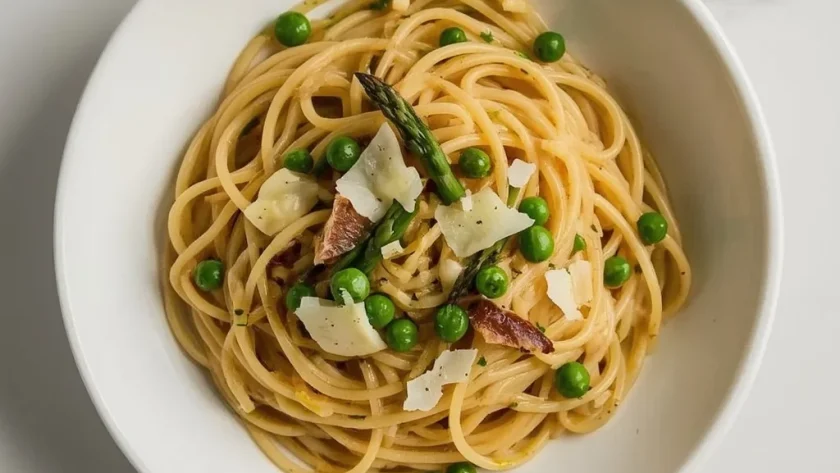
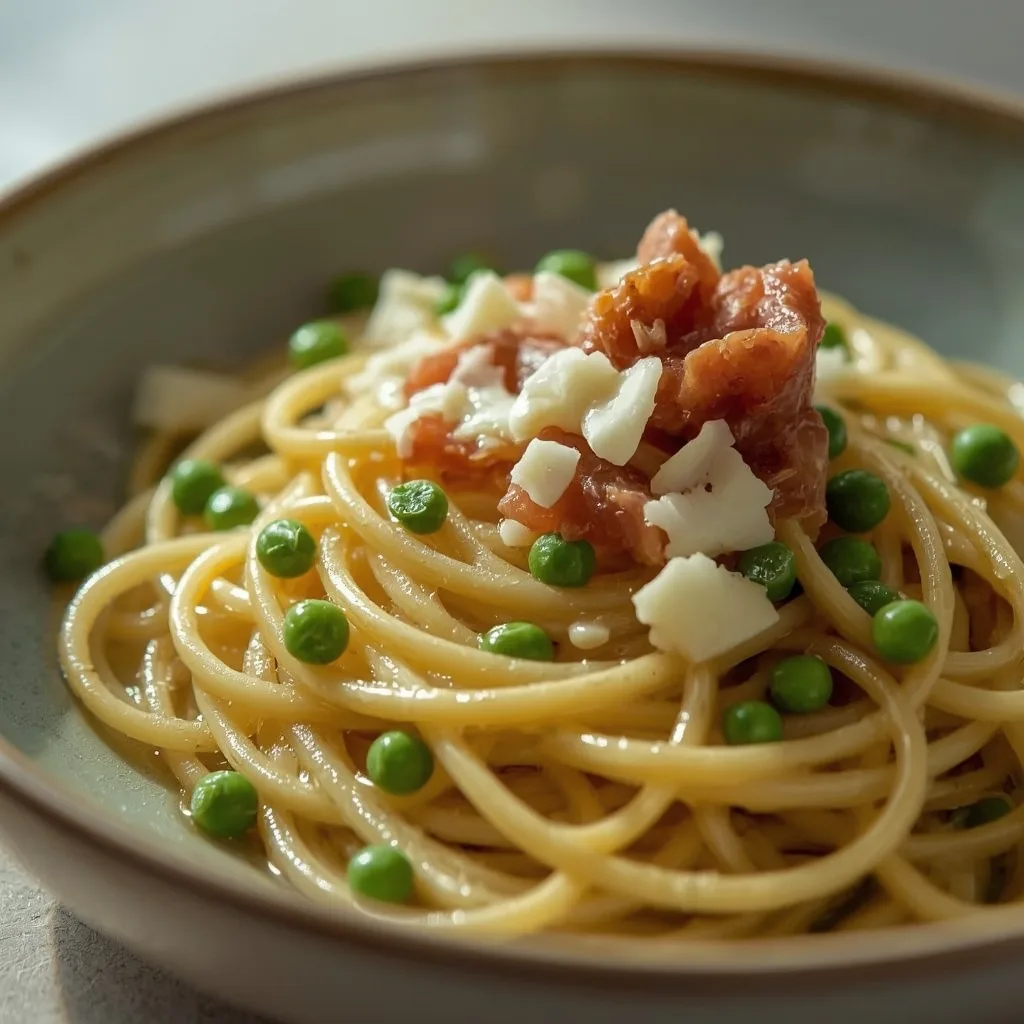
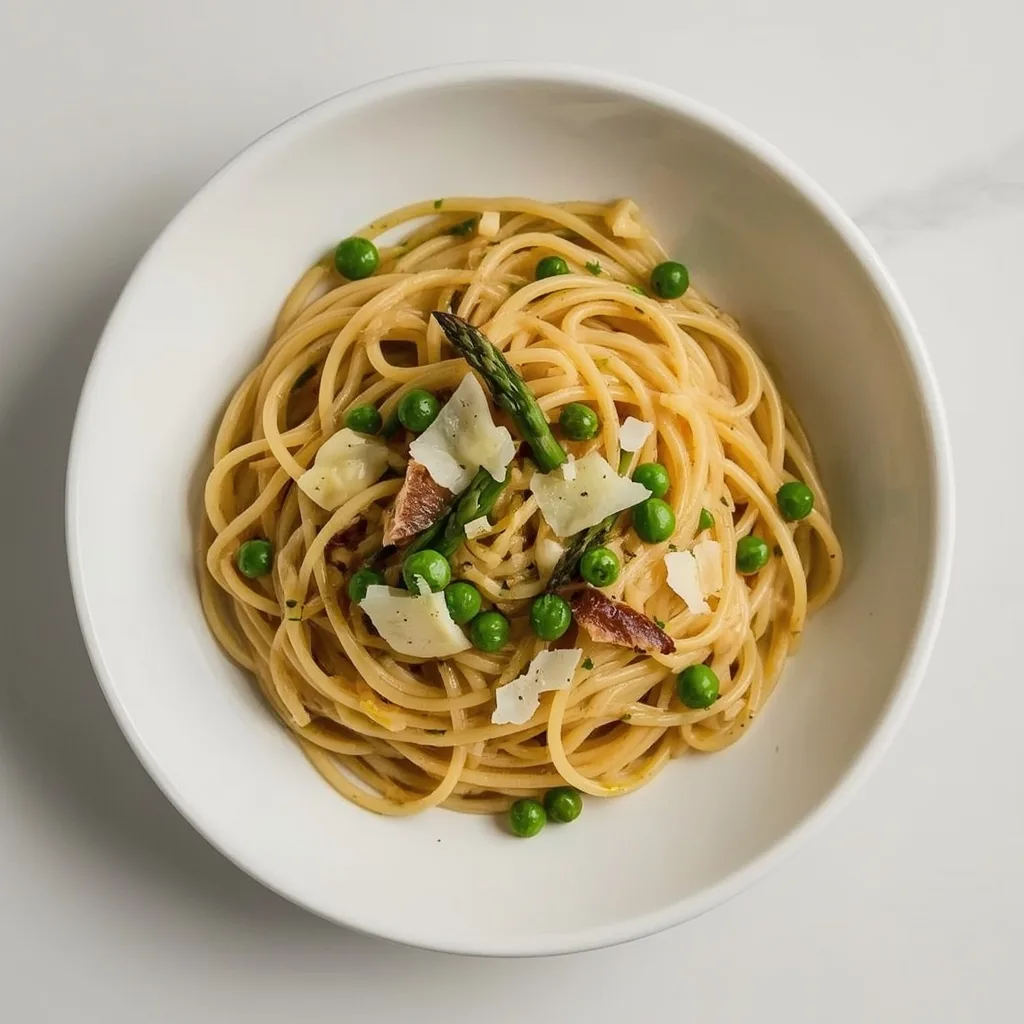
 The Ina Garten Spring Carbonara takes the classic Roman pasta and gives it a seasonal refresh with crisp asparagus, sweet peas, and that signature silky egg-and-cheese sauce. It is rich, creamy, and surprisingly bright — a bowl that feels indulgent but not heavy.
From start to finish, this dish takes about 40 minutes and is manageable for a confident beginner. The trickiest moment comes when you add the egg mixture off the heat, but a short 10-second rest before pouring makes all the difference.
Ina Garten Spring Carbonara Overview
The core of this dish stays true to Italian tradition: guanciale renders slowly to create a flavorful fat base, while a mix of egg yolks, whole eggs, and Pecorino Romano forms the backbone of the sauce. What sets it apart from the original is the generous handful of blanched asparagus and frozen peas stirred in at the end.
Those vegetables do more than add color. The asparagus offers a tender crunch, and the peas pop with sweetness against the salty, savory guanciale. The pasta water, starchy and reserved from the boil, helps the sauce coat every strand without turning clumpy.
Working with guanciale rather than pancetta or bacon gives a deeper, more pork-forward flavor that stands up to the Pecorino. If you have never cooked with it before, you will notice it renders more fat than bacon — that is exactly what you want.
Why This Recipe is Worth Trying
- The sauce stays silky every time — Taking the skillet off the heat before adding the eggs prevents scrambling. That short pause is foolproof.
- Vegetables add freshness without extra work — The asparagus and peas cook in the same water you blanch the pasta in, so there is no separate pot to wash.
- Guanciale delivers restaurant-quality flavor — Its rich, cured fat crisps beautifully and infuses the entire dish with a savory depth you cannot get from bacon.
- The whole meal comes together in one skillet — After rendering the guanciale, you use the same pan to toss the pasta and build the sauce. Minimal cleanup.
- It scales easily for a crowd — The ingredient ratios hold up well. Double the batch and use a larger pot without any conversion headaches.
Ingredients You’ll Need for This Recipe
Here is every ingredient you need, grouped by category, with notes on what each one does.
Pasta and Protein
- 1 pound dried spaghetti (preferably De Cecco or Barilla) — A sturdy brand holds up to the thick sauce without turning mushy. The shape catches the sauce well.
- 1/2 pound guanciale, cut into 1/4-inch thick slices, then into 1/2-inch pieces — This cured pork cheek renders slowly and gives the dish its signature richness. If you cannot find it, good pancetta works.
Vegetables
- 1/2 pound asparagus, woody ends trimmed, cut into 1-inch pieces on the bias — Cut on the bias creates more surface area for the sauce to cling to. Spear thickness varies, so check doneness at 2 minutes.
- 1 cup frozen peas (do not thaw) — Adding them frozen straight into the blanching water keeps them bright green and sweet. Thawing first makes them mushy.
Eggs and Cheese
- 4 large egg yolks (from large eggs, about 20g each yolk) — The yolks create the creamy richness. Save the whites for another use, or add them to your next omelet.
- 2 large whole eggs — These provide structure and help the sauce emulsify properly. Room temperature eggs blend more smoothly.
- 1 1/2 cups freshly grated Pecorino Romano cheese (about 4 ounces), plus more for serving — Pre-grated cheese will not melt as evenly. Grate it yourself for a silky sauce.
Seasoning and Oil
- 1 teaspoon freshly ground black pepper, plus more for serving — Freshly ground pepper is essential here. Pre-ground is too fine and loses its punch.
- 1 teaspoon kosher salt (for pasta water) — This seasons the pasta from within. The water should taste noticeably salty, like the sea.
- 1 tablespoon olive oil (for drizzling if needed) — Only use this if the guanciale renders dry. Most of the time the fat alone is enough.
- 1/2 cup reserved pasta cooking water (plus more as needed) — The starchy water is the key to a creamy sauce that coats without being gluey.
Useful Equipment
- Large pot (at least 6 quarts) — You need enough water for the pasta to move freely. A smaller pot leads to sticky, clumpy spaghetti.
- Large skillet (12-inch, preferably stainless steel or nonstick) — The wide surface allows the guanciale to render evenly and gives you room to toss the pasta with the sauce.
- Slotted spoon — Moving the crispy guanciale out of the pan while leaving the fat behind is much easier with a slotted spoon than tongs.
- Microplane or box grater — A fine grater produces fluffy Pecorino that melts instantly into the egg mixture. A coarse grater leaves clumps.
- Tongs — Tossing the pasta with the sauce requires good leverage. Tongs give you the control to coat every strand without crushing the pasta.
Steps to Make Ina Garten Spring Carbonara
Follow these steps in order, and pay close attention to the moment you add the egg mixture — that is where most mistakes happen.
- Salt and boil the pasta water — Fill a large pot with 4 quarts of water and 1 teaspoon kosher salt. Bring it to a rolling boil. The water should taste noticeably salty, like the sea.
- Render the guanciale — Place the guanciale pieces in a cold skillet. Set over medium heat and cook, stirring occasionally, for 8-10 minutes until the fat renders and the meat is crisp and golden brown. Do not rush this step. If the pan looks dry, add the olive oil halfway through.
- Remove the guanciale; keep the fat — Use a slotted spoon to transfer the crispy pieces to a small bowl. Leave the rendered fat in the skillet. Set the skillet aside off the heat.
- Cook the pasta and vegetables — Add the spaghetti to the boiling water and cook according to package directions for al dente, usually 8-10 minutes. Meanwhile, in a separate pot of boiling salted water, blanch the asparagus for 2 minutes until bright green and just tender. During the last 30 seconds, add the frozen peas to warm through. Drain and set aside. If you are using the same pot for both, remove the pasta with tongs before blanching the vegetables.
- Whisk the egg-cheese mixture — In a medium bowl, whisk together the egg yolks, whole eggs, grated Pecorino Romano, and black pepper until smooth and pale yellow. Keep it at room temperature — do not refrigerate, or the sauce will not emulsify properly.
- Combine pasta and fat — When the pasta is al dente, reserve 1 cup of the starchy cooking water, then drain the spaghetti (do not rinse). Immediately add the hot pasta to the reserved skillet with the guanciale fat. Toss over medium heat for 1 minute to coat evenly.
- Add the egg mixture off the heat — Remove the skillet from the heat. Let it rest for 10 seconds to prevent the eggs from scrambling. Pour the egg-cheese mixture over the pasta, tossing vigorously with tongs to create a creamy, emulsified sauce. Add the reserved pasta water 1/4 cup at a time, tossing until the sauce is silky and coats every strand. You may not need all of it.
- Add vegetables and guanciale — Add the blanched asparagus, peas, and reserved crispy guanciale. Toss to distribute evenly, about 30 seconds. If the sauce thickens too much, add another splash of pasta water to loosen.
- Serve immediately — Divide into warm bowls. Top each portion with extra grated Pecorino Romano and a generous crack of black pepper. The sauce will continue to thicken as it cools, so serve right away.
What Went Wrong and How I Fixed It
Here is what tripped me up the first few times, and what I learned.
- Eggs scrambled on contact — I poured the egg mixture straight into the hot pan without waiting. Now I remove the skillet from the heat and count to 10 before adding the eggs. That pause saves the sauce.
- Lumpy, clumpy sauce — Pre-grated Pecorino does not melt evenly. Grating the cheese yourself creates a fine, fluffy powder that dissolves smoothly into the eggs.
- Pasta stuck together in the pan — I used too small a pot. A 6-quart pot gives the spaghetti room to move, and the starch stays suspended in the water rather than gluing the noodles together.
- The sauce was too thick by the time I served it — Carbonara sauce sets quickly as it cools. Now I add an extra splash of pasta water right before serving, and I warm the bowls in the oven for a few minutes.
- Underdone asparagus — Thick spears need more than 2 minutes. I now cut thicker stalks in half lengthwise before blanching so they cook at the same rate as thin ones.
Ways to Make Ina Garten Spring Carbonara Healthier
- Use whole wheat spaghetti — Swapping white pasta for whole wheat adds roughly 6g more fiber per serving. The nutty flavor pairs well with the Pecorino.
- Reduce the guanciale by half — Cut the guanciale to 1/4 pound and use 1 tablespoon of olive oil to compensate for the lost fat. You still get that cured pork flavor with less total fat.
- Replace half the Pecorino with nutritional yeast — Nutritional yeast has a cheesy, savory flavor and reduces the sodium per serving by around 200mg. Use 3/4 cup each of yeast and Pecorino.
- Add extra vegetables — Toss in a handful of fresh spinach or a few halved cherry tomatoes when you add the peas. They boost the vitamin content without altering the sauce.
- Use egg whites only — Swap the 2 whole eggs for 4 additional egg whites. This cuts the cholesterol significantly while still providing enough structure for the sauce.
Alternative Ingredients for Ina Garten Spring Carbonara
- Guanciale → Pancetta (same amount by weight) — Pancetta is easier to find in most supermarkets and renders similarly. The flavor is slightly less intense but still excellent.
- Spaghetti → Fettuccine or bucatini (same weight) — Fettuccine holds the thicker sauce well, and bucatini gives you a fun, hollow center that traps extra sauce.
- Pecorino Romano → Parmesan Reggiano (same volume, 1 1/2 cups) — Parmesan is nuttier and milder. Use a mix of both for a balanced flavor.
- Asparagus → Green beans or sugar snap peas (same volume) — Both blanch in about 2 minutes and offer a similar crisp texture and fresh taste.
- Frozen peas → Fresh shelled peas (same volume) — Fresh peas are sweeter and hold a brighter color. Blanch them for 1 minute instead of 30 seconds.
- Olive oil → Butter (1 tablespoon) — If you need a fat for the pan and the guanciale is lean, butter adds a gentle richness that complements the cheese.
What to Serve With Ina Garten Spring Carbonara
A few simple sides and drinks round out the meal without stealing the spotlight from the pasta.
- A crisp green salad with lemon vinaigrette — The acidity cuts through the richness of the carbonara. Use a simple mix of arugula or romaine with a sharp lemony dressing.
- Grilled or roasted asparagus spears — Double down on the spring theme. Toss extra asparagus with olive oil and salt, then grill for 4 minutes. A light char adds a smoky note.
- Focaccia or crusty bread — A warm, chewy bread soaks up any extra sauce left on the plate. Avoid heavily seasoned bread that competes with the Pecorino.
- A glass of dry white wine — Pinot Grigio or a light Sauvignon Blanc complements the salty guanciale and creamy sauce without overwhelming the dish.
- Lemon sorbet for dessert — A tart, icy finish cleanses the palate after the rich pasta. Keep it simple — no heavy chocolate desserts here.
Best Tips for Ina Garten Spring Carbonara
- Work quickly after adding the eggs — The residual heat from the pasta cooks the eggs in about 30 seconds. Toss constantly during that window to build the emulsion before it sets.
- Reserve more pasta water than you think you need — The sauce thickens fast, and having a full cup of starchy water on hand lets you loosen it gradually. You can always discard what you do not use.
- Keep the egg mixture at room temperature — Cold eggs and cheese shock the hot pasta and can cause the sauce to break. Set the bowl on the counter while you cook the pasta.
- Slice the asparagus on a bias — The angled cut exposes more surface area to the sauce and makes each piece look intentional on the plate. It also cooks slightly faster than straight-cut pieces.
- Warm your serving bowls — Cold bowls pull heat from the pasta and speed up sauce thickening. A quick dip in hot water or a minute in a low oven makes a difference.
- Do not rinse the pasta — Rinsing washes away the starch that helps the sauce cling to the noodles. Drain it well and transfer it straight to the skillet.
Unique Takes on Ina Garten Spring Carbonara
- Lemon zest twist — Add the finely grated zest of one lemon to the egg mixture. The citrus brightens the whole dish and pairs beautifully with the asparagus and peas.
- Smoked salmon variation — Replace the guanciale with 1/2 pound of smoked salmon, torn into bite-sized pieces. Add it at the very end to avoid overcooking, and use dill instead of black pepper.
- Mushroom and thyme carbonara — Sauté 8 ounces of sliced cremini mushrooms in the guanciale fat after removing the meat. Add fresh thyme leaves with the vegetables. The earthy mushrooms complement the rich sauce.
- Spicy chili flake finish — Sprinkle 1/2 teaspoon of red pepper flakes into the egg mixture or on top right before serving. The heat cuts through the creamy sauce and wakes up the palate.
- Herb-packed version — Stir 1/4 cup of chopped fresh parsley and 2 tablespoons of chopped fresh basil into the finished dish. The herbs add a fresh, garden-like finish that matches the spring theme.
How to Store Ina Garten Spring Carbonara
- In an airtight container in the refrigerator — Transfer leftovers to a sealed container and refrigerate within 2 hours of cooking. The dish keeps for up to 2 days, but the sauce will continue to thicken as it cools.
- Do not freeze the pasta — The egg-based sauce breaks and becomes grainy when frozen. If you must freeze, do so before adding the egg mixture, then finish fresh when reheating.
- Portion into individual containers — Storing single servings makes reheating faster and more even. You can grab one portion without thawing the whole batch.
- Press plastic wrap directly onto the surface — Before sealing the container, lay a piece of plastic wrap on top of the pasta. This prevents a skin from forming on the sauce during refrigeration.
How to Reheat Ina Garten Spring Carbonara
- Stovetop method (best results) — Place the leftover pasta in a skillet over low heat with a splash of water or milk. Toss constantly until warmed through, about 3-4 minutes. The gentle heat restores the creamy texture without scrambling the eggs.
- Microwave method (quick, but watch carefully) — Transfer to a microwave-safe bowl, add a splash of milk, and cover loosely. Microwave in 30-second bursts at 50% power, stirring between each burst. Stop as soon as it is warm to avoid overheating the eggs.
- Steam basket method (for small portions) — Place the pasta in a heatproof bowl over a pot of simmering water. Cover and steam for 3-4 minutes. This gentle method keeps the sauce smooth and prevents graininess.
FAQs
Can I freeze Ina Garten Spring Carbonara?
Freezing is not recommended. The egg-based sauce separates and becomes grainy when thawed. The texture will never return to its creamy state.
How long does Ina Garten Spring Carbonara last in the fridge?
Stored properly in an airtight container, it stays good for up to 2 days. After that, the sauce continues to thicken, and the peas may turn mushy.
Can I use bacon instead of guanciale?
Yes, but the flavor will be different. Bacon is smoked, while guanciale is not. Use 1/2 pound of thick-cut bacon, and cook it until crisp. The smokiness will come through strongly.
Why did my egg sauce turn into scrambled eggs?
The pan was too hot when you added the egg mixture. Always remove the skillet from the heat and let it rest for 10 seconds before pouring in the eggs. Toss quickly but gently off the heat.
Can I make this dish gluten-free?
Absolutely. Use your favorite gluten-free spaghetti and cook it according to package directions. The rest of the ingredients are naturally gluten-free.
Do I need to thaw the peas first?
No. Add them frozen directly to the boiling water during the last 30 seconds of blanching the asparagus. They warm through without losing their bright color or sweet flavor.
Nutritional Breakdown (Per Serving)
Based on 1 serving = 1/4 of the recipe (about 1 1/2 cups of pasta).
- Calories: 632
- Protein: 27g
- Fat: 26g
- Carbohydrates: 72g
- Fiber: about 5g
- Sugar: around 5g
- Sodium: 780mg
Conclusion
This Ina Garten Spring Carbonara proves that a rich, creamy pasta can still feel fresh and seasonal. The crisp asparagus, sweet peas, and salty guanciale make every bite balanced and satisfying.
Give it a try on a weeknight when you want something special without spending hours in the kitchen. Once you nail that off-heat egg technique, you will come back to this one again and again.
PrintIna Garten Spring Carbonara
A vibrant twist on the classic Roman pasta, this Spring Carbonara combines al dente spaghetti with crisp asparagus, sweet peas, and a silky sauce of egg, Pecorino, and guanciale. The vegetables add freshness and color while the rich, creamy coating clings to every strand for a balanced, satisfying dish.
- Prep Time: 20
- Cook Time: 20
- Total Time: 40
- Yield: 4 1x
- Category: Main Course
- Method: Stovetop
- Cuisine: Italian
Ingredients
- 1 pound dried spaghetti (preferably De Cecco or Barilla)
- 1/2 pound guanciale, cut into 1/4-inch thick slices, then into 1/2-inch pieces
- 1 tablespoon olive oil (for drizzling if needed)
- 1/2 pound asparagus, woody ends trimmed, cut into 1-inch pieces on the bias
- 1 cup frozen peas (do not thaw)
- 4 large egg yolks (from large eggs, about 20g each yolk)
- 2 large whole eggs
- 1 1/2 cups freshly grated Pecorino Romano cheese (about 4 ounces), plus more for serving
- 1 teaspoon freshly ground black pepper, plus more for serving
- 1 teaspoon kosher salt (for pasta water)
- 1/2 cup reserved pasta cooking water (plus more as needed)
Instructions
- Fill a large pot (at least 6 quarts) with 4 quarts of water and 1 teaspoon kosher salt. Bring to a rolling boil over high heat. Salt the water generously — it should taste like the sea — to season the pasta from within as it cooks.
- While the water comes to a boil, place the guanciale pieces in a large, cold skillet (12-inch, preferably stainless steel or nonstick). Set over medium heat and cook, stirring occasionally, for 8-10 minutes, until the fat renders and the meat is crisp and golden brown. Do not rush this step; rendering slowly ensures the fat crisps without burning. If the pan looks dry, add the olive oil halfway through.
- Using a slotted spoon, transfer the crispy guanciale to a small bowl, leaving the rendered fat (about 3 tablespoons) in the skillet. Set the skillet aside off the heat — you’ll reuse it to finish the pasta.
- Add the spaghetti to the boiling water and cook according to package directions for al dente, usually 8-10 minutes. While the pasta cooks, in a separate large pot of boiling salted water (or the same pot if you time it right), blanch the asparagus for 2 minutes until bright green and just tender. During the last 30 seconds of blanching, add the frozen peas to warm through. Drain the vegetables and set aside. (If using the same pot as pasta, remove pasta with tongs before blanching.)
- In a medium bowl, whisk together the egg yolks, whole eggs, grated Pecorino Romano, and black pepper until smooth and pale yellow. Set aside at room temperature — do not refrigerate, or the sauce will not emulsify properly.
- When the pasta is al dente, reserve 1 cup of the starchy pasta cooking water, then drain the spaghetti (do not rinse). Immediately add the hot pasta to the reserved skillet with the guanciale fat. Toss over medium heat for 1 minute to coat evenly.
- Remove the skillet from the heat. Let it rest for 10 seconds — this prevents the eggs from scrambling on contact. Pour the egg-cheese mixture over the pasta, tossing vigorously with tongs to create a creamy, emulsified sauce. Add the reserved pasta water 1/4 cup at a time, tossing until the sauce is silky and coats every strand (you may not need all of it). The residual heat from the pasta cooks the eggs gently.
- Add the blanched asparagus and peas along with the reserved crispy guanciale. Toss to distribute evenly, about 30 seconds. If the sauce thickens too much, add another splash of pasta water to loosen.
- Serve immediately in warm bowls, topping each portion with extra grated Pecorino Romano and a generous crack of black pepper. The sauce will continue to thicken as it cools, so serve right away for the perfect creamy texture.
Notes
Storage: This dish is best enjoyed immediately as the sauce sets and may separate when cooled. If needed, refrigerate leftovers in an airtight container for up to 2 days. Freezing is not recommended due to the egg-based sauce. Reheating: Place leftovers in a skillet over low heat with a splash of water or milk, tossing constantly until warmed through, about 3-4 minutes. Do not microwave, as it will overcook the eggs and make the sauce grainy.
Nutrition
- Calories: 632
- Sugar: 5g
- Sodium: 780mg
- Saturated Fat: 10g
- Carbohydrates: 72g
- Fiber: 5g
- Protein: 27g
- Cholesterol: 245mg
Keywords: spring carbonara, Ina Garten carbonara, pasta carbonara, asparagus carbonara, pea carbonara, guanciale pasta, Italian pasta recipe, spring pasta, weeknight dinner, carbonara recipe, spaghetti carbonara, Pecorino pasta, egg sauce pasta