Ina Garten Spring Carbonara
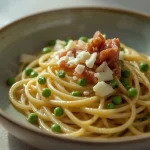
A vibrant twist on the classic Roman pasta, this Spring Carbonara combines al dente spaghetti with crisp asparagus, sweet peas, and a silky sauce of egg, Pecorino, and guanciale. The vegetables add freshness and color while the rich, creamy coating clings to every strand for a balanced, satisfying dish.
- Prep Time: 20
- Cook Time: 20
- Total Time: 40
- Yield: 4 1x
- Category: Main Course
- Method: Stovetop
- Cuisine: Italian
Ingredients
- 1 pound dried spaghetti (preferably De Cecco or Barilla)
- 1/2 pound guanciale, cut into 1/4-inch thick slices, then into 1/2-inch pieces
- 1 tablespoon olive oil (for drizzling if needed)
- 1/2 pound asparagus, woody ends trimmed, cut into 1-inch pieces on the bias
- 1 cup frozen peas (do not thaw)
- 4 large egg yolks (from large eggs, about 20g each yolk)
- 2 large whole eggs
- 1 1/2 cups freshly grated Pecorino Romano cheese (about 4 ounces), plus more for serving
- 1 teaspoon freshly ground black pepper, plus more for serving
- 1 teaspoon kosher salt (for pasta water)
- 1/2 cup reserved pasta cooking water (plus more as needed)
Instructions
- Fill a large pot (at least 6 quarts) with 4 quarts of water and 1 teaspoon kosher salt. Bring to a rolling boil over high heat. Salt the water generously — it should taste like the sea — to season the pasta from within as it cooks.
- While the water comes to a boil, place the guanciale pieces in a large, cold skillet (12-inch, preferably stainless steel or nonstick). Set over medium heat and cook, stirring occasionally, for 8-10 minutes, until the fat renders and the meat is crisp and golden brown. Do not rush this step; rendering slowly ensures the fat crisps without burning. If the pan looks dry, add the olive oil halfway through.
- Using a slotted spoon, transfer the crispy guanciale to a small bowl, leaving the rendered fat (about 3 tablespoons) in the skillet. Set the skillet aside off the heat — you’ll reuse it to finish the pasta.
- Add the spaghetti to the boiling water and cook according to package directions for al dente, usually 8-10 minutes. While the pasta cooks, in a separate large pot of boiling salted water (or the same pot if you time it right), blanch the asparagus for 2 minutes until bright green and just tender. During the last 30 seconds of blanching, add the frozen peas to warm through. Drain the vegetables and set aside. (If using the same pot as pasta, remove pasta with tongs before blanching.)
- In a medium bowl, whisk together the egg yolks, whole eggs, grated Pecorino Romano, and black pepper until smooth and pale yellow. Set aside at room temperature — do not refrigerate, or the sauce will not emulsify properly.
- When the pasta is al dente, reserve 1 cup of the starchy pasta cooking water, then drain the spaghetti (do not rinse). Immediately add the hot pasta to the reserved skillet with the guanciale fat. Toss over medium heat for 1 minute to coat evenly.
- Remove the skillet from the heat. Let it rest for 10 seconds — this prevents the eggs from scrambling on contact. Pour the egg-cheese mixture over the pasta, tossing vigorously with tongs to create a creamy, emulsified sauce. Add the reserved pasta water 1/4 cup at a time, tossing until the sauce is silky and coats every strand (you may not need all of it). The residual heat from the pasta cooks the eggs gently.
- Add the blanched asparagus and peas along with the reserved crispy guanciale. Toss to distribute evenly, about 30 seconds. If the sauce thickens too much, add another splash of pasta water to loosen.
- Serve immediately in warm bowls, topping each portion with extra grated Pecorino Romano and a generous crack of black pepper. The sauce will continue to thicken as it cools, so serve right away for the perfect creamy texture.
Notes
Storage: This dish is best enjoyed immediately as the sauce sets and may separate when cooled. If needed, refrigerate leftovers in an airtight container for up to 2 days. Freezing is not recommended due to the egg-based sauce. Reheating: Place leftovers in a skillet over low heat with a splash of water or milk, tossing constantly until warmed through, about 3-4 minutes. Do not microwave, as it will overcook the eggs and make the sauce grainy.
Nutrition
- Calories: 632
- Sugar: 5g
- Sodium: 780mg
- Saturated Fat: 10g
- Carbohydrates: 72g
- Fiber: 5g
- Protein: 27g
- Cholesterol: 245mg
Keywords: spring carbonara, Ina Garten carbonara, pasta carbonara, asparagus carbonara, pea carbonara, guanciale pasta, Italian pasta recipe, spring pasta, weeknight dinner, carbonara recipe, spaghetti carbonara, Pecorino pasta, egg sauce pasta
Find it online: https://inagartendishes.com/ina-garten-spring-carbonara/