Ina Garten Vanilla Cake
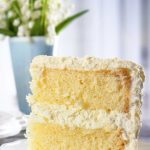
This stovetop adaptation of a classic vanilla layer cake produces a tender, fine crumb with rich butter flavor and a pronounced vanilla aroma. The cake stays moist from whole milk and eggs, while a simple vanilla glaze keeps the finish elegant and true to the original profile.
- Prep Time: 25
- Cook Time: 40
- Total Time: 65
- Yield: 4 1x
- Category: Main Course
- Method: Stovetop
- Cuisine: International
Ingredients
For the cake:
- 1 1/2 cups all-purpose flour
- 1 1/2 tsp baking powder
- 1/4 tsp baking soda
- 1/2 tsp fine sea salt
- 6 tbsp unsalted butter, softened
- 3/4 cup granulated sugar
- 2 large eggs, room temperature
- 2 tsp pure vanilla extract
- 1/2 cup whole milk, room temperature
For the glaze:
- 1 cup powdered sugar, sifted
- 2 tbsp whole milk
- 1 tsp pure vanilla extract
- 1 tbsp unsalted butter, melted
Instructions
- Lightly grease one 8-inch round cake pan and line the bottom with a circle of parchment so the cake releases cleanly after steaming. Set a large deep skillet, Dutch oven, or wide pot on the counter with a tight-fitting lid and a low rack or metal ring inside; this keeps the cake pan elevated so the batter cooks evenly from trapped steam rather than direct contact with the hot base.
- In a medium bowl, whisk together the all-purpose flour, baking powder, baking soda, and fine sea salt for 30 seconds to distribute the leavening thoroughly. This step prevents tunneling and uneven rise, which can happen if baking powder pockets remain in the batter.
- In a separate mixing bowl, beat the softened butter and granulated sugar with a hand mixer for 3 to 4 minutes until noticeably lighter in color and fluffy in texture. Proper creaming traps air, which is especially important in a stovetop cake because you are relying on both mechanical aeration and chemical leavening for lift.
- Add the eggs one at a time, beating well after each addition until fully incorporated and smooth, then mix in the vanilla extract. If the mixture looks slightly curdled, do not panic; it will come back together once the flour and milk are added.
- Add one-third of the flour mixture to the butter mixture and mix on low speed just until the flour mostly disappears. Add half the milk, then repeat with another third of the flour, the remaining milk, and finally the last of the flour, mixing only until combined after each addition to avoid a tough cake from overdeveloped gluten.
- Scrape the batter into the prepared cake pan and smooth the top with a small offset spatula or the back of a spoon so it cooks level. Tap the pan once or twice on the counter to release any large trapped air bubbles, but do not overdo it or you will knock out the structure you just built.
- Pour enough hot water into the skillet or pot to come about 1 inch up the sides, keeping the water below the rack. Set the pan on the rack, cover the pot with the lid wrapped underneath with a clean kitchen towel to catch condensation, and cook over medium-low heat until you hear a gentle simmer; then reduce to low heat and steam the cake for 35 to 40 minutes, adjusting the heat as needed so the water stays at a quiet simmer and never boils aggressively.
- Check the cake at 35 minutes by briefly lifting the lid straight up so no water drips onto the surface. The cake is done when the top looks set, springs back lightly when touched in the center, and a toothpick inserted in the middle comes out clean or with a few dry crumbs; if the top is still wet or sticky, cover and cook 3 to 5 minutes longer.
- Transfer the cake pan to a wire rack and let it rest for 10 minutes before unmolding. Running a thin knife around the edge helps release the sides cleanly, and this short rest allows the crumb to firm up so the cake does not break while turning out.
- While the cake cools, whisk together the powdered sugar, whole milk, vanilla extract, and melted butter in a small bowl until smooth and pourable. If the glaze is too thick, add milk 1 teaspoon at a time; if too thin, add a little more sifted powdered sugar until it falls in a thick ribbon.
- Set the cake right side up on the rack or a serving plate and spoon the glaze over the top, letting it drip naturally toward the edges. Allow the glaze to set for 15 minutes before slicing so it forms a delicate finish rather than soaking straight into the crumb.
- For an oven alternative, bake the prepared batter in a preheated 350°F / 177°C oven for 25 to 30 minutes in the same 8-inch round pan. Use the same doneness cues: a lightly golden top, a springy center, and a clean toothpick from the middle.
Notes
Store the cooled glazed cake covered at room temperature for up to 2 days or in the refrigerator for up to 5 days. Freeze individual slices or the whole ungarnished cake, tightly wrapped, for up to 2 months; thaw overnight in the refrigerator. To serve from the refrigerator, let slices stand at room temperature for 20 to 30 minutes, or warm unglazed slices in a 300°F oven for 5 to 7 minutes until just softened.
Nutrition
- Calories: 521
- Sugar: 49.8g
- Sodium: 285mg
- Saturated Fat: 10.8g
- Carbohydrates: 82.7g
- Fiber: 1.0g
- Protein: 7.7g
- Cholesterol: 123mg
Find it online: https://inagartendishes.com/ina-garten-vanilla-cake/