Ina Garten Chocolate Orange Cake
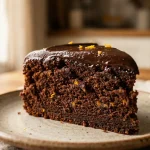
This elegant, single-layer cake features a supremely moist, tender crumb infused with fresh orange zest and juice, topped with a rich, glossy chocolate ganache. The bright citrus notes perfectly balance the deep, bittersweet chocolate for a sophisticated dessert that’s surprisingly simple to prepare.
- Prep Time: 25
- Cook Time: 35
- Total Time: 60
- Yield: 4 1x
- Category: Dessert
- Method: Baking
- Cuisine: American
Ingredients
- For the Cake:
- 1 cup (200g) granulated sugar
- Zest of 2 large navel oranges (about 2 tbsp packed zest)
- 1/2 cup (1 stick / 113g) unsalted butter, at room temperature
- 2 large eggs, at room temperature
- 1 1/2 cups (188g) all-purpose flour, spooned and leveled
- 1/4 cup (22g) natural unsweetened cocoa powder, sifted
- 1/2 tsp baking powder
- 1/2 tsp baking soda
- 1/2 tsp fine sea salt
- 1/2 cup (120ml) fresh orange juice (from about 1 1/2 oranges)
- 1/2 cup (120ml) full-fat buttermilk, at room temperature
- 1 tsp pure vanilla extract
- For the Chocolate Orange Ganache:
- 4 oz (113g) bittersweet chocolate (60-70% cacao), finely chopped
- 1/2 cup (120ml) heavy cream
- 1 tbsp (14g) unsalted butter, at room temperature
- Pinch of fine sea salt
- 1 tsp fresh orange juice
- For Garnish (Optional):
- Candied orange peel or thin strips of fresh orange zest
Instructions
- Preheat your oven to 350°F / 177°C. Generously butter an 8-inch round cake pan, line the bottom with a parchment paper circle, and butter the parchment. This dual-layer of fat ensures the cake releases cleanly without sticking to the pan.
- In a medium bowl, combine the granulated sugar and orange zest. Use your fingertips to rub the zest into the sugar for 1-2 minutes until the sugar is fragrant and slightly damp. This process, called “muddling,” releases the essential oils from the zest, maximizing the orange flavor throughout the cake batter.
- In the bowl of a stand mixer fitted with the paddle attachment, cream the softened butter and orange-sugar mixture on medium-high speed for 3-4 minutes until light, fluffy, and pale yellow. Scrape down the bowl halfway through. Proper creaming incorporates air, which is crucial for the cake’s rise and tender texture.
- Add the room-temperature eggs one at a time, beating on medium speed for 45 seconds after each addition until fully incorporated. Scrape the bowl after each egg. Adding eggs slowly prevents the emulsion from breaking, which would result in a greasy, dense cake.
- In a separate bowl, whisk together the flour, sifted cocoa powder, baking powder, baking soda, and salt. In a liquid measuring cup, combine the fresh orange juice, buttermilk, and vanilla extract. The acid in the buttermilk and juice will react with the baking soda for lift.
- With the mixer on low speed, add one-third of the dry ingredients to the butter mixture, mixing just until combined. Follow with half of the buttermilk mixture. Repeat, ending with the final third of dry ingredients. Mix only until no streaks of flour remain; overmixing develops gluten and leads to a tough crumb.
- Pour the batter into the prepared pan and smooth the top with an offset spatula. Tap the pan firmly on the counter 2-3 times to release any large air bubbles. Bake on the center rack for 30-35 minutes.
- The cake is done when the top springs back lightly when touched, the edges pull away slightly from the pan, and a toothpick inserted into the center comes out with a few moist crumbs (not wet batter). Avoid overbaking, which dries out the cake.
- Cool the cake in the pan on a wire rack for 20 minutes. Then, run a thin knife around the edge, invert the cake onto the rack, peel off the parchment, and let it cool completely. Cooling in the pan first prevents the delicate structure from collapsing.
- While the cake cools, make the ganache. Place the finely chopped chocolate in a heatproof bowl. In a small saucepan, heat the heavy cream over medium heat until it just begins to simmer, with small bubbles forming around the edges. Do not boil.
- Immediately pour the hot cream over the chopped chocolate. Let it sit undisturbed for 3 minutes to melt the chocolate, then gently whisk from the center outward until smooth, glossy, and fully combined. Whisk in the butter, salt, and 1 tsp orange juice until the butter is fully incorporated and the ganache is silky.
- Let the ganache cool at room temperature for 15-20 minutes, stirring occasionally, until it thickens to a pourable but not runny consistency—it should coat the back of a spoon thickly. If it becomes too thick, gently re-warm for 5 seconds in the microwave.
- Place the cooled cake on a serving plate. Pour the thickened ganache onto the center of the cake. Use an offset spatula to gently guide it to the edges, allowing it to drip decoratively down the sides. Work quickly before the ganache sets.
- If using, garnish the top with candied orange peel or fresh zest. Let the ganache set for at least 30 minutes at cool room temperature before slicing. Use a sharp, thin-bladed knife dipped in hot water and wiped dry for clean slices.
Notes
Storage: Store the cake, covered at room temperature in a cake dome or under a large inverted bowl, for up to 2 days. For longer storage, refrigerate for up to 5 days; let slices come to room temperature for 30 minutes before serving. Freezing: Wrap the unfrosted, cooled cake tightly in plastic wrap and then aluminum foil; freeze for up to 3 months. Thaw overnight in the refrigerator, then bring to room temperature and frost. The ganache can be made ahead and refrigerated for up to 5 days; reheat gently in 10-second intervals in the microwave, stirring until fluid again.
Nutrition
- Calories: 685
- Sugar: 55g
- Sodium: 420mg
- Unsaturated Fat: 22g
- Carbohydrates: 85g
- Fiber: 4g
- Protein: 9g
- Cholesterol: 145mg
Keywords: ina garten chocolate orange cake, chocolate orange cake recipe, orange chocolate ganache cake, easy layer cake, citrus chocolate dessert, buttermilk cake, elegant dinner party dessert, baking from scratch, moist chocolate cake, Ina Garten inspired